

Not many people think about the cost of kidney disease, says a University of Alberta researcher. But the toll on Canadians is high.
Kidney disease will affect one in 10 Canadians and costs the healthcare system more than $40 billion each year. The number of people living with end-stage kidney disease, which has no current cure, has grown by 35 per cent since 2009. “It’s very underappreciated, the significance and burden of the disease,” said researcher Todd Alexander.
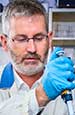
Todd Alexander
It’s also an incredibly complex disease. Race, sex and gender-based variables all play a role yet aren’t adequately considered in research. To improve the odds for Canadians with kidney disease, we need more well-trained, top-tier kidney researchers.
That’s exactly what a program led by Alexander is looking to accomplish. The Kidney Research Scientist Core Education and National Training Program (KRESCENT) was initially established in 2005, and is now expanding thanks to a funding boost of more than $2.5 million from the Canadian Institutes of Health Research.
“To do better, we need more knowledge about how kidneys work and why they don’t. That’s one of the reasons KRESCENT was originally developed,” said Alexander, director of KRESCENT 2.0.
Certain components of the original program, such as focused mentorship and experiential learning opportunities, will remain. However, many of the program’s expansions focus on providing researchers with a more thorough understanding of the relevant variables that can change how kidney disease presents and should be treated.
“It’s not just about funding these people; it’s about making sure they get the right training.”
For example, Alexander explained, factors like hormones and muscle mass play a role in how researchers measure kidney function.
“Males and females don’t experience the same disease the same way, so we need to do better at training people to understand sex as a variable and gender as a variable,” said Alexander, who is also associate director of the Women and Children’s Health Research Institute, a Stollery Science Lab Distinguished Researcher, and Canada Research Chair in Epithelial Transport Physiology.
Dialysis patients to be surveyed on mental health during COVID-19 by Gillian Rutherford
Rates of depression, anxiety were 10 times higher even before the pandemic started
Kidney disease is also more prevalent among people from racialized communities. Black and Indigenous populations in Canada have a threefold increase of kidney disease risk, yet these groups are less likely to receive optimal therapy. The expanded program has incorporated a variety of new training initiatives, targeted awards and a prioritization of funding for researchers tackling inequities in kidney health outcomes.
“We’re always learning ways to make research better and more productive.”
The funding for KRESCENT 2.0 is part of a larger $31-million, six-year commitment from the federal government. Over the next six years, the program will continue to evolve and grow, said Alexander.
“This will be a big boost to the areas that were funded because now you’ve got these resources that we can then create new resources with.”
The original KRESCENT program and KRESCENT 2.0 are partnerships between researchers at the U of A and other public universities across Canada, the Kidney Foundation of Canada, the Canadian Society of Nephrology and the CIHR Institute for Nutrition, Metabolism and Diabetes.
| By Adrianna MacPherson
Adrianna is a reporter with the University of Alberta’s Folio online magazine. The University of Alberta is a Troy Media Editorial Content Provider Partner.
The opinions expressed by our columnists and contributors are theirs alone and do not inherently or expressly reflect the views of our publication.
© Troy Media
Troy Media is an editorial content provider to media outlets and its own hosted community news outlets across Canada.