

Rising temperatures and reduced snowfall having an impact on Prairie crops
A study conducted by researchers at the University of Alberta has revealed that Canada’s Prairie provinces, a critical area for crop production, have been experiencing rising temperatures and increasing aridity over the past 120 years. The research, led by Emmanuel Mapfumo, an adjunct professor in the Faculty of Agricultural, Life & Environmental Sciences, investigated the effects of climate change on Alberta, Saskatchewan, and Manitoba from 1901 to 2021.

Emmanuel Mapfumo
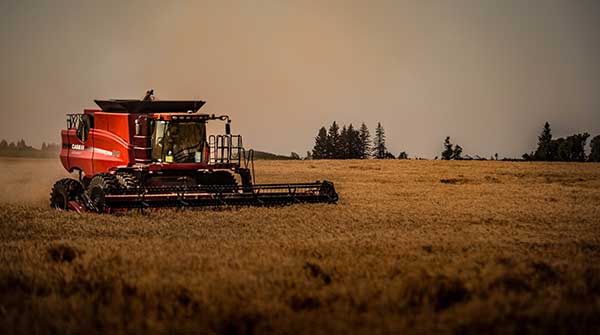 Photo by Andrew Draper |
| Related Stories |
| New clubroot strains threaten Western Canadian canola crops
|
| Natural gas key to Canadian farming
|
| Are some cows better at weathering climate change?
|
The findings demonstrate a consistent pattern of higher air temperatures during winter and spring, reduced snowfall, and more frequent and intense rainfall events. These changes could have significant consequences for crop production in the region.
“Our report highlights the state of knowledge about the Prairies and where we can go from here,” says Mapfumo, who is also an associate professor at Concordia University of Edmonton. “There’s so much regional variability, it’s important to have data particular to an area to create adaptation strategies that will help protect crops.”
Mapfumo stresses that the Prairie provinces, along with parts of Ontario and Quebec, are crucial to Canada’s economy, contributing $30.6 billion to the country’s GDP in 2022 and employing over 118,000 workers in crop production.
“It’s vital to find ways to mitigate local climate change, which affects the ability to grow various crops and hence affects crop yields, and has ripple effects such as higher food costs,” Maffumo says.
The study analyzed historical climate data, including air temperature, precipitation, drought, and crop yield, from various sources, including scientific studies, websites, books, and government documents.
One significant finding is the increase in minimum air temperatures, which have risen by 1°C to 4.5°C over time, indicating milder winters. This change can result in reduced snow cover and lower early spring moisture levels, impacting the initial stages of crop growth. The combination of higher maximum temperatures and increased evaporation rates could require more rainfall to maintain crop health.
Growing degree days and corn heat units, related to crop maturity, have also shown an upward trend. While warmer temperatures might enable the northward expansion of crops like corn, they could also lead to drier conditions, increased disease prevalence, and earlier emergence of pests, such as the wheat midge, affecting other crops.
The research highlights the need for adaptation strategies at the regional level. Mapfumo suggests exploring options such as crop rotation or changes in crop selection to address the challenges posed by drier conditions.
The study lays the foundation for future research specific to the Prairie region, providing valuable insights for policy development and adaptation strategies. Mapfumo underscores the importance of continuing to collect data to better understand and address the impacts of climate change on Prairie cropland.
| Staff
The opinions expressed by our columnists and contributors are theirs alone and do not inherently or expressly reflect the views of our publication.
© Troy Media
Troy Media is an editorial content provider to media outlets and its own hosted community news outlets across Canada.



0 Comments