
Use early validation and manufacturing input to ensure your product hits the market without expensive errors
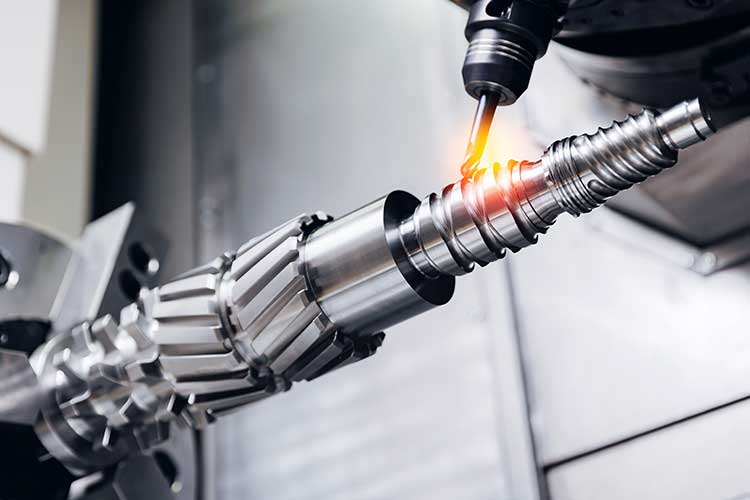
Bring the manufacturer in early to kill expensive engineering problems before they start.
Quick answer: New product development (NPD) is the structured process of turning an idea into a manufacturable, market-ready product. It moves a concept through ideation, design and engineering, prototyping, validation, manufacturing setup, and launch, with checks at each step that confirm the product can actually be built, sold, and supported.
Most products that fail don’t fail at the idea stage. They fail somewhere between the CAD model and the first production run, when a design that looked clean on screen turns out to be expensive, slow, or impossible to manufacture at volume. The job of a good NPD process is to surface those problems early, while they’re cheap to fix, instead of late, when they’ve already been tooled.
This guide walks through the full process end to end and explains where a manufacturing partner fits. If you want a single point of contact across the whole arc, Yijin offers new product development services that span concept support through production.
What is new product development?
New product development is the work of taking something that exists only as a need or a sketch and turning it into a finished product a customer can buy. It covers the commercial side (who is this for, what problem does it solve, what will it cost) and the technical side (how is it designed, what is it made from, how is it built).
A useful way to think about it: NPD is a series of decisions that progressively lock in cost and feasibility. The earliest decisions, made when almost nothing has been spent, end up determining the large majority of what the product will eventually cost to produce. By the time you’ve cut steel for a mold, most of your options are gone. So the discipline isn’t really about working faster. It’s about making the right calls in the right order, and bringing in the people who can see downstream consequences before those consequences are baked in.
What are the stages of new product development?
There’s no single canonical model, and the names vary by industry. But almost every workable process moves through six phases that build on each other. Skipping one rarely saves time; it just relocates the delay to a worse place later.
1. Ideation and concept validation
This is where you generate candidate ideas and kill most of them. The goal isn’t a polished concept, it’s a defensible one: a clear statement of the user, the problem, and roughly how the product solves it. Teams that do this well spend more energy disqualifying ideas than falling in love with them.
Concept validation means putting the idea in front of reality before committing engineering hours. That can be customer interviews, a rough mockup, a teardown of competing products, or a back-of-envelope cost target. The output is a go/no-go decision and a set of requirements clear enough to hand to a design team.
2. Design and engineering
Now the concept becomes geometry. Industrial design shapes how the product looks and feels; mechanical and electrical engineering make it function. This phase produces CAD models, a bill of materials, tolerances, and material selections.
This is also the first point where manufacturing input pays off. Choices made here, wall thickness, draft angles, fastener types, material grades, set the ceiling for how cheaply and reliably the thing can ever be produced. A design reviewed for manufacturability now avoids a redesign loop after tooling, which is one of the most expensive mistakes in the whole sequence.
3. Prototyping and testing
A prototype turns the model into something you can hold, measure, and break. Early prototypes answer questions like does it fit together, does it feel right, and does the mechanism work. Later ones get closer to production intent in both material and process.
Different goals call for different methods. A quick 3D-printed part proves form and fit in hours; a CNC-machined prototype in the production material tells you how the real thing will behave under load. Yijin turns prototypes around in 3 to 7 days, which matters because the value of a prototype drops the longer the team waits for it. Fast iteration keeps momentum and keeps decisions evidence-based instead of speculative.
4. Design validation
Validation is the difference between we think it works and we’ve shown it works. Here the product is tested against its requirements and, where relevant, against standards and regulations. Mechanical parts get load and fatigue testing; medical and aerospace components face documentation and traceability requirements that shape how every later step is run.
This stage is where quality systems earn their keep. Working with a partner certified to AS9100D, IATF 16949, ISO 13485, and ISO 9001 means the validation evidence, material certs, inspection records, and process controls is generated as a matter of routine rather than scrambled together at the end. If your product touches automotive, medical, or aerospace markets, that paperwork is part of the product, not an afterthought.
5. Manufacturing and supply-chain setup
A validated design still has to be turned into a repeatable production process. This means selecting the manufacturing methods, sourcing materials, planning capacity, and setting up the quality checks that will run on every unit. For molded or cast parts it includes tooling; for machined or fabricated parts it includes fixturing, programming, and inspection planning.
This is the bridge between engineering and production, and it’s where having one capable partner across multiple processes simplifies life. A product that uses a machined housing, a sheet-metal bracket, a few custom fasteners, and a molded cover can be coordinated under one roof rather than stitched together across separate vendors. Because Yijin runs machining, fabrication, molding, casting, custom fasteners and 3D printing in one place, a single supply chain can cover most of a typical product’s parts.
6. Production and launch
Production starts with a small run to confirm the process holds up before scaling. Once first-article inspection passes and yields look stable, volume ramps. Launch then becomes a logistics and quality question: can you make units consistently, at the rate the market needs, with defects caught before they ship.
A practical advantage at this stage is flexible volume. Yijin runs anywhere from 1 to 100,000+ parts with no minimum order, so a launch can start cautiously and scale as demand proves out, rather than forcing a large first commitment before the market has spoken. Typical production runs complete in 2 to 4 weeks.
Where do NPD projects go wrong?
The failure patterns are remarkably consistent across industries.
Manufacturing comes in too late. A team designs in isolation, validates the design, then hands it to a manufacturer who points out it can’t be built economically. Now the validated design has to change, and validation may have to start over. Every loop here costs weeks.
Requirements stay vague. When nobody writes down the real tolerances, environment, and cost target, every later stage interprets them differently, and the gaps surface during production when they’re most expensive to close.
Prototyping proves the wrong thing. A printed model that looks perfect tells you nothing about how the production material handles heat or stress. Confusing a form prototype with a functional one creates false confidence.
Tooling decisions get rushed. Cutting a mold before the design is genuinely stable is one of the costliest ways to learn that a feature didn’t work. Tooling should follow validation, not race it.
Supply chain is an afterthought. A brilliant design that depends on a single hard-to-source material or one overloaded vendor isn’t really finished. Resilience belongs in the design conversation, not the crisis after launch.
Nearly all of these trace back to the same root: decisions made without input from the people who’ll have to manufacture the thing.
How does manufacturing fit into NPD?
The old model treated manufacturing as the last station on the line. You finished the design, then found someone to build it. That model produces the failure patterns above with depressing regularity.
The better model brings manufacturing knowledge in during design and engineering, and keeps it present through validation and setup. The mechanism is design for manufacturability (DFM): reviewing a design through the lens of how it’ll actually be produced, so cost, lead time, and reliability get engineered in rather than discovered later. A partner who knows the realities of machining, molding, casting, and fabrication can flag a problem feature while it’s still a few clicks to change in CAD.
“Manufacturers should contribute to product development, not production alone. The earlier we see a design, the more we can do to make it cheaper, faster, and more reliable to build,” says Gavin Yi, Founder and CEO of Yijin Solution.
Concretely, early manufacturing involvement does a few things. It pressure-tests material and process choices against cost and availability. It catches geometry that’s hard to machine or mold. It aligns tolerances with what the chosen process can actually hold, so you’re not paying for precision you don’t need or specifying precision the process can’t deliver. And it sets up the quality and documentation trail so validation has something to draw on.
With 25+ years of work behind 500,000+ precision parts a year across 10,000+ clients, the patterns repeat enough that an experienced partner can often see the snag before the customer does. That accumulated judgment is most of what early involvement buys you.
How do you choose an NPD partner?
Plenty of suppliers can make a part to a drawing. Fewer can help you develop a product. When you’re evaluating partners for the full arc rather than a single job, weigh these:
Breadth of process. A partner who only does one process will steer every part toward that process, whether or not it fits. One that offers machining, fabrication, fasteners, molding, casting, and printing can recommend the right method per part and keep coordination simple. Yijin runs 150+ advanced CNC machines alongside its other capabilities, so capacity is rarely the bottleneck on the machining side.
Quality systems that match your market. If you’re in regulated territory, the certifications aren’t optional. AS9100D (aerospace), IATF 16949 (automotive), ISO 13485 (medical), and ISO 9001 (general quality management) each signal a documented, audited way of working that your own compliance depends on.
Speed where it counts. Prototype turnaround sets your iteration pace; production lead time sets your launch schedule. Prototypes in 3 to 7 days and production in 2 to 4 weeks keep both moving.
Volume flexibility. A partner who’ll do one prototype and then a hundred thousand units, without forcing a minimum order, lets you scale on the market’s terms instead of theirs.
Willingness to engage early. The single best predictor of a smooth project is whether the manufacturer wants to see your design before it’s frozen. A partner who asks DFM questions during design is one who’ll save you a redesign later.
Bringing it together
The NPD process is a sequence of decisions that get harder and more expensive to reverse the further you go. The teams that ship successfully aren’t necessarily the fastest at any single stage. They’re the ones who front-load the hard questions, validate before they tool, and bring manufacturing into the room while the design can still flex.
A partner who works across the whole process, from concept feasibility through production, collapses the handoffs where projects usually stumble. If you want manufacturing thinking embedded from the first design review through your first production run, that’s the model Yijin’s new product development services are built around.
Frequently asked questions
How long does the new product development process take? It varies widely with complexity and how many redesign loops occur. A simple part can move from concept to production in a couple of months; a regulated or mechanically complex product can take a year or more. The biggest swing factor is rework: catching problems during design rather than after tooling can save months. Fast prototyping (3 to 7 days) and production runs in 2 to 4 weeks compress the parts of the timeline that are within a manufacturer’s control.
When should I involve a manufacturer in product development? As early as the design and engineering phase, ideally before any geometry is locked. Early DFM input shapes material and process choices while changes are still cheap, which is the whole point of getting a manufacturer in the room before the design is frozen.
What’s the difference between a prototype and a production part? A prototype exists to answer a question, about form, fit, or function, and may use a faster method or different material than the final part. A production part is made by the process and material you’ll use at volume, with the quality controls that will run on every unit. Treating one as the other is a common source of late surprises.
Do I need certifications for my product? It depends on the market. Aerospace, automotive, and medical products carry mandatory standards that affect how every stage is documented and controlled. Working with a partner certified to AS9100D, IATF 16949, ISO 13485, and ISO 9001 means the supporting records exist by default rather than being assembled at the end.
Can one partner handle all my product’s parts? Often, yes. A product mixing machined, fabricated, molded, cast, and fastened components can be coordinated under one supplier when that supplier covers multiple processes. Yijin’s processes reach across CNC work, sheet metal, molding, die casting, fasteners and additive, which lets most of a typical product’s bill of materials sit with one source.
Is there a minimum order quantity for production? Not always. Yijin runs from 1 to 100,000+ parts with no minimum order, so you can start a launch small, confirm demand, and scale up without committing to a large first run.
This content is a joint venture between our publication and our partner. We do not endorse any product or service mentioned in the article.



0 Comments