

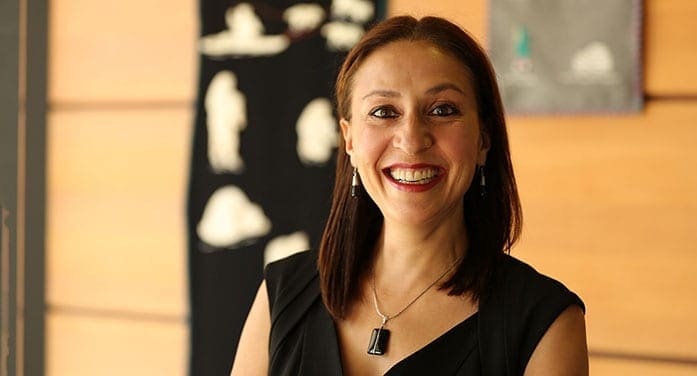
U of A researcher Sangita Sharma is leading a project working with communities in the Northwest Territories to co-create a culturally appropriate program encouraging more people to get vaccinated against HPV. The team will also gauge people’s attitudes and experiences related to COVID-19 vaccines. (Photo: Faculty of Medicine & Dentistry)
A University of Alberta researcher will consult with two Indigenous communities in the Northwest Territories to co-create a culturally appropriate promotion program for the human papillomavirus (HPV) vaccine.
HPV is the most common sexually transmitted infection and the main cause of cervical cancer worldwide, but it is preventable with a vaccine for females aged nine to 45 years and males aged nine to 26. The vaccination rate in Northwest Territories is 55 per cent compared with up to 92 per cent in other parts of the country.
“We’re aiming to develop a community-based program that addresses the communities’ concerns for HPV and ultimately reduces HPV-related cancers,” said Sangita Sharma, University of Alberta Centennial Professor in the Faculty of Medicine & Dentistry and lead of the Indigenous and Global Health Research Group.
The Canadian Institutes of Health Research (CIHR) has announced that Sharma and her partners have been granted $2.1 million to investigate and improve the utilization of HPV vaccination. The initiative is one of 19 U of A projects receiving a total of $13.7 million in funding from CIHR.
The team will also capture experiences with the COVID-19 vaccine and examine attitudes toward COVID-19 vaccination. The Northwest Territories government is currently offering the Moderna vaccine to anyone over the age of 18.
The project team will work with one small, remote community and another medium-sized, semi-remote community. Community conversations will include Inuvialuit, First Nations and Métis peoples. The project will take five years and will be guided by community advisory boards that include Indigenous community members, leaders and Elders.
“We’re hoping our consultations will take place through on-the-land activities such as fishing, hunting, beading and hide tanning – while the youth are learning from grandparents and parents, from the Elders, so we get the whole community’s perspective,” said Sharma, who also holds the Alberta Health Services Chair in Indigenous Health.
The team will use an approach to research known as “Two-Eyed Seeing,” which Sharma explained incorporates the strengths of Indigenous knowledge, wisdom and ways of knowing with the strengths of western knowledge and ways of knowing.
This project builds on Sharma’s previous research on attitudes toward cancer and cancer screening in Indigenous communities, which led to the development of a series of educational videos.
Sharma’s partners on the project include the two northern communities, the community advisory boards, the Hotıì ts’eeda research unit and Northwest Territories Health and Social Services, as well as Fariba Kolahdooz, executive director of U of A’s Indigenous and Global Health Research Group; Gina Ogilvie and Carolyn Gotay of the University of British Columbia; and Donna Kurtz of UBC Okanagan.
| By Gillian Rutherford for Troy Media
This article was submitted by the University of Alberta’s Folio online magazine. Folio is a Troy Media Editorial Content Provider Partner.



0 Comments