
A Headless CMS centralizes content, enables omnichannel delivery, and future-proofs your digital strategy
Headless CMS is the ultimate solution for managing multiple brands efficiently.
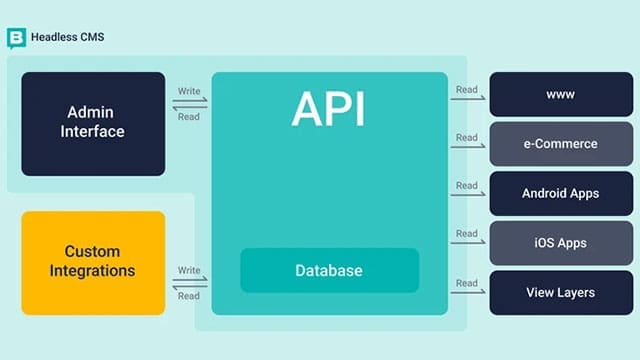
As companies operate in different markets with varying target consumers, managing content across various brands becomes increasingly challenging. Content management systems do not always provide the required back-end solution to properly manage diverse brand identities and operations in the marketplace and online; efficiency, adaptability, and effectiveness are oftentimes needed. A multi-brand management solution is a Headless CMS now and forever because the findings support an enterprise-level accessible approach. A Headless CMS is the solution of the future because: it’s API-driven with expandable integrations and a unified content center. A Headless CMS removes content creation and rendering from presentation, and it essentially gives enterprises the power to create, control, and distribute content across multiple brands, channels, and locations very easily. A Headless CMS fosters multi-brand efforts by providing a centralized brand solution for content efforts and ultimately creating digital uniformity across the various verticals with the ability to scale when/how brands desire.
Centralized Content Management for Multi-Brand Consistency
The biggest problem with multi-brand content management is the ability to brand consistently yet differently across channels. Each brand would require a new instance or a duplicated content architecture on generalized CMSs, which only add to the redundancies of brand silos, content silos, and avoidable cost increases. A Headless CMS solves this problem with a single content repository. Companies can create, edit, and store content in one place but push it out across multiple brand websites, applications, and digital footprints.
Therefore, companies can still enforce messaging, branding, and compliance efforts but simultaneously enjoy the advantages of regionally, culturally, and audience-based adjustments when necessary. For example, a parent company of brands across product lines can house all product specifications, marketing copy, and press releases of the corporate and brand levels in one Headless CMS yet customize the user experience front end and design for each brand’s website. Thus, there’s less duplicative content, better content efficiencies and project management, and all brands are on the same page with parent company intentions.
Scalability and Future-Proof Content Distribution
When brands mature and begin to penetrate other markets, content management is replicable. Where brands were not able to expand before due to more basic offerings, legacy somewhat stable constraints of content do make scalable efforts more complicated across more brands, more languages, more regions. A Headless CMS breaks these boundaries with an API-first mindset. Instead, content is delivered to apps on smartphones, webpages, IoT devices, applications for voice, and as yet invented digital spaces. Thus, when the brand’s presence extends to new touchpoints or when new digital engagements are added, the structure of a backend for a Headless CMS doesn’t matter because it’s already configured to adapt to the change without redoing everything from scratch.
For instance, a multinational clothing behemoth expanding into different territories may need a Headless CMS for tailored content development to guarantee that product details and promotional strategies, brand messaging, and branding harmony will occur with regional dialects, sociocultural expectations, and consumerism tendencies. The capacity to provide uniform content through regional branches worldwide is attractive to those who need extensive yet simultaneous diversified web interaction.
Multi-Channel and Omnichannel Content Delivery
Brands must engage consumers on all platforms from brand websites and applications to smart TVs, digital kiosks, and social media sites. Why headless CMS is the future of content management lies in its ability to streamline content distribution across these diverse touchpoints seamlessly. Yet, in the need to create content across such diverse platforms, it’s daunting without a decentralized, centralized content strategy. A Headless CMS addresses the need for content across channels because brands can push out content to all digital channels without reinventing the wheel. Companies no longer need to cut and paste text and image logos and stretch them to suit branding and platform; instead, with Headless CMS, companies can make real-time adjustments through APIs and confirm that all platforms have the same real-time, updated content.
For example, a hospitality empire that has various locations and vacation options can utilize a Headless CMS to connect its reservation information, payment systems, and vacation options across its website, booking applications, digital concierge tablets, e-blasts, etc. The customer experience is a uniform branded experience all over regardless of how they access the brand. Thus, stemming from a Headless CMS which enables omnichannel distribution of content, brands enjoy the benefit of uniform quality across digital spaces while avoiding the headaches of content oversight.
Streamlined Workflow and Collaboration Across Brand Teams
By running multiple brands, teams of marketers, content producers, graphic designers, and developers must constantly communicate. Unfortunately, many legacy CMS systems foster collaboration-inhibiting silos as everyone works on separate projects to get their jobs done, creating duplicative exertion, reduced efficiencies, and out-of-sync groups. However, a Headless CMS creates the opportunity for better collaboration through one centralized project repository, so teams working across multiple brands can better execute their content, know who’s working on what, and pending approvals. Therefore, brand managers can better communicate with developers and designers about timing to ensure branding changes, content edits, and necessary marketing initiatives are completed accurately and on time.
This is how a Headless CMS serves the purposes of a multi-brand e-commerce company as well, because it supports geographically based marketing teams to create geo-targeted content without violating overall brand compliance standards of a top-down organization. The role-based access level does not compromise content approval; however, at the same time, content can be created, approved, and distributed faster. Furthermore, a Headless CMS has workflow automations and collaborative editing tools for company-wide efficiencies that reduce the bandwidth and management needed for various content across various brands.
Personalization and Localization for Global Audiences
Different brands cater to different consumers and therefore, a target market operates with a locale, culture, and demographics of its own. A Headless CMS allows for advanced targeting and localization so that, in every country or culture in which the brand operates, it can easily present the version of the content that works best for its in-market audience.
The capability of AI-driven, on-the-fly content personalization and content distribution via API allows a Headless CMS to easily change content based on customer engagement, geographical targeting, or translation-based needs. Brands can offer suggested products, geo-fenced offers, and regionally relevant copy for those who need to see it most, fostering engagement and revenue.
For example, a parent company of an all-in-one restaurant brand can utilize a Headless CMS to personalize and customize menu options and promotional activities by relying upon the palates, popularities, and needs of specific locations. Therefore, consumers receive geo-targeted data on the online platform, and the Headless approach provides the overarching parent company with a cohesive branding endeavor and legal compliance. The opportunity to personalize and geo-target from geo-segmentation via a Headless CMS enables companies to function more efficiently while giving a brand experience that is accountable.
The Future of Multi-Brand Content Management with Headless CMS
As brands, channels, and geographies expand their digital footprint today and tomorrow companies need a content solution that is scalable, effective, flexible, and proactive. Companies need to ensure they’re doing the same thing across a global web in an effective and efficient manner while also maintaining specific localized brand presences. This comprehensive solution is critical. Otherwise, companies operate in siloed pockets with a diluted approach that’s development and engagement inhibiting. The best solution for the modern multi-brand enterprise is a Headless CMS. It offers one content library, distribution across platforms, and collaboration with AI-powered personalization.
A Headless CMS is a decoupled presentation. This means that brands can create, edit, and store content in one place with one library but access that content from one source and present it across many places. For multi-brand enterprises with one larger parent library, this is great for consistent branding and messaging. However, at the same time, a Headless CMS allows for personalization, localization, and differentiation. Furthermore, if an enterprise caters to websites, mobile applications, IoT, or digital signage, a Headless CMS allows enterprises to push live updates to all respective libraries at once, across platforms. This means all digital libraries will have the newly updated content simultaneously without the need for reworking or re-licensing. This saves time and redundancy, facilitating operational efficiency.
Companies need a content infrastructure for agile future readiness with AI content automation, voice shopping, AR/VR, and future generations of digital offerings. A Headless CMS enables future enhancements with AI and machine learning for auto-generated content, customizable experiences, and predictive analytics that drive better engagement with digital content. For instance, a retail brand that constantly puts out new product lines will benefit from an AI-driven Headless CMS to promote machine learning to determine cross-selling suggestions, to push out promotional opportunities, and even geo-segmented campaigns based on location and prior engagement.
In addition, a news outlet will benefit from a Headless CMS that relies on software as opposed to human validations for urgent news updates, video, and storytelling opportunities across the digital spectrum to provide information to interested parties ASAP. Moreover, brands engage with consumers in different ways because of emerging digital encounters like augmented reality (AR), virtual reality (VR), and the metaverse. For example, brands pioneering AR/VR integrations need a dynamic, API-first CMS that not only creates and distributes content intended for AR/VR use across many mediums but also maintains a consistent experience across real and virtual worlds.
A Headless CMS empowers brands with such engaging content that translates across forward-thinking technological interfaces, from AI or voice-activated devices to goggles for AR use, to ensure brand equity across transitional environments. In addition, compliance and security are significant elements of a company’s concern. A multi-market enterprise doesn’t need to worry about just brand standards that the public has come to expect. Still, it also has to maintain a unified regulatory standard per market and it can do so with a Headless CMS. A Headless CMS comes with built-in security features like role-based access controls, encrypted API connections, and compliance checks for GDPR, CCPA, and other international privacy regulations.
When content management efforts can be reliably managed in compliance with geographic and vertical regulations, companies sidestep legal issues, increasing customer trust and transparency. Those organizations that implement a Headless CMS solution now will be best positioned to manage brand ecosystems, promote revolutionary customer experience interactions, and make content editing efforts easier in the future. At that time, organizations focused on versatility and growth with omnichannel availability will ease the next.com class transformation digitally the best. Those businesses using a Headless CMS as their main content solution will be set to fulfill any requirements for multi-brand content solutions for longevity, innovation, and edge in the digital marketplace going forward.
Conclusion: Why Headless CMS Is the Future of Multi-Brand Content Management
The challenge of multi-brand content management requires a modern scalable solution. A Headless CMS solves multi-brand content management because it centralizes content creation and delivery across brands, syndicates across channels, enables teams to work together seamlessly, and ultimately, provides better opportunities for personalization. Therefore, as the trend of digital experiences and consumer interaction continues to increase, any brand that proposes a Headless CMS solution will have the competitive advantage of omnichannel content management and easily position its brand to be adaptable, innovative, and safe moving forward. A Headless CMS is no longer a nice-to-have or an extra. It’s a critical investment, the one solution that will enable proper content management in a scalable fashion across any brand with the potential for the highest yield.
This content is a joint venture between our publication and our partner. We do not endorse any product or service mentioned in the article.



0 Comments